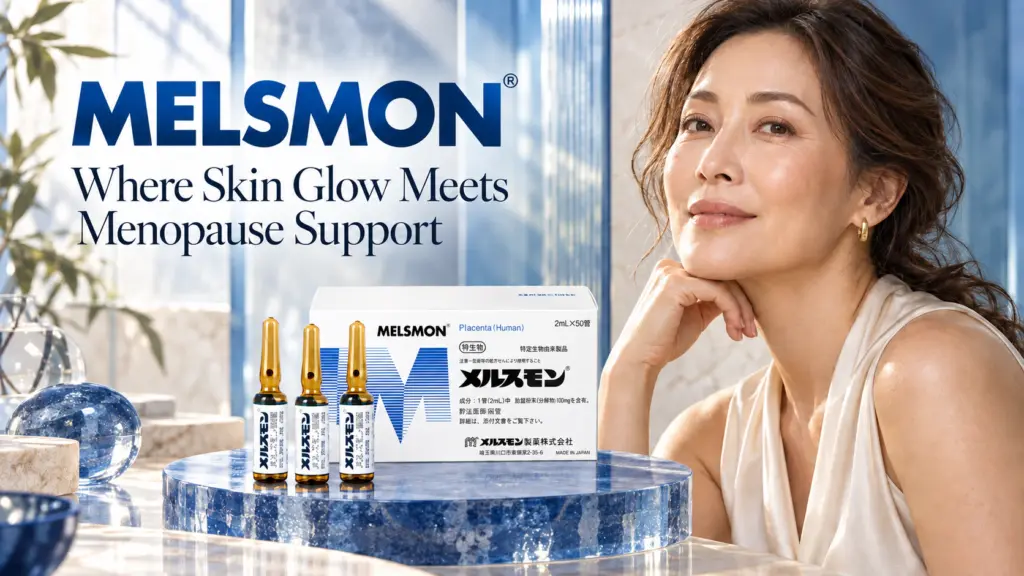
People usually discover Melsmon when they want skin to feel more hydrated, supple and rested as they move through perimenopause or menopause. The product has an established medical role in menopausal disorders, while Melsmon-specific laboratory research shows activity in the same collagen-, elastin- and hyaluronic-acid pathways that shape skin hydration, flexibility and resilience.
Melsmon is a hydrolysed human placental extract. Its skin story rests on a direct biological chain: menopause affects fibroblast activity and the skin’s supporting matrix; Melsmon has been studied in human dermal fibroblasts; and those studies recorded increases in matrix-related genes and proteins. This gives customers a concrete reason to associate Melsmon with softer, smoother and more resilient-looking skin.
The product therefore belongs naturally in a menopausal skin-quality conversation. Hydration, suppleness, smoother texture and a rested glow are the changes customers can understand and professionals can track.
The life-stage biology behind the concern
Why menopausal skin responds to a matrix-focused approach
Oestrogen helps regulate the fibroblasts that maintain collagen, elastin and hyaluronic acid within the skin. As oestrogen levels change during perimenopause and menopause, the skin can hold less water, lose some of its spring and feel thinner or rougher. Dermatology reviews describe this pattern across hydration, thickness, elasticity and collagen support.
These biological changes match the concerns customers describe in everyday language. Their moisturiser seems to disappear more quickly, makeup sits differently, and a complexion that once looked naturally fresh can appear dry or tired by the end of the day. The common thread is the condition of the skin matrix beneath the visible surface.
Melsmon fits this stage because its two best-supported stories meet in the same place. The official product information centres on menopausal disorders, and the skin research centres on fibroblasts and extracellular-matrix components. Together, they create a focused product rationale for customers whose skin concerns began or became more noticeable during the menopausal transition.
Cytollia’s current Melsmon product page is the direct route for product availability and purchasing details.
Turn glow into visible, useful markers
What meaningful skin-quality improvement can look like
Glow comes from several visible qualities working together. A well-hydrated surface reflects light more evenly. Supple skin moves smoothly and feels comfortable. A stronger-looking texture gives the complexion a fresher, more rested finish.
For a customer considering Melsmon, the most useful skin-quality markers are:
- More comfortable hydration that lasts more consistently through the day.
- A softer, more supple feel when cleansing, applying skincare or wearing makeup.
- Smoother-looking texture and light reflection, which support a clearer glow.
- Better-looking resilience, especially when poor sleep or menopausal symptoms have been making the complexion appear depleted.
- A fresher overall appearance created by improvements across comfort, texture and bounce.
These markers turn “glow” into something practical. They also make progress easier to evaluate under the same lighting, skincare routine and time of day.
The product-specific skin mechanism
How Melsmon connects to collagen, elastin and hydration
The ingredient story begins with the way Melsmon is made. Manufacturer information describes a hydrochloric-acid hydrolysis process that breaks down larger proteins and hormones. A 2025 scientific review characterises the resulting preparation as being composed mainly of smaller constituents such as amino acids.
Amino acids are familiar building blocks in protein synthesis, but the stronger part of the Melsmon story is that researchers also tested the finished extract in normal human dermal fibroblasts. They observed increased expression of COL1A1 and COL5A3, genes involved in collagen formation; ELN, associated with elastin; and HAS2, a key enzyme in hyaluronic-acid production.
The same work reported higher levels of type I collagen, proteoglycan, elastin and hyaluronic acid in the treated cells. Each finding maps onto a customer-facing skin goal:
- Collagen supports the skin’s structure and firm appearance.
- Elastin supports flexibility and spring.
- Proteoglycans help organise the extracellular matrix and its moisture-rich environment.
- Hyaluronic acid supports water binding, comfort and suppleness.
Separate Melsmon research under oxidative-stress conditions found activation of NRF2-related antioxidant pathways and cellular-resilience markers. This adds another relevant layer for skin exposed to the everyday stressors associated with a tired, dull-looking complexion.
The bottom-line logic is direct: menopausal skin loses matrix support, while Melsmon-specific research shows activity in the same matrix-building and resilience pathways. These product-specific cellular findings establish the biological rationale behind its hydration, elasticity and glow positioning, with visible progress assessed for each individual client.
The human clinical side of Melsmon
Why menopause support strengthens the skin story
Melsmon’s official Japanese patient information lists menopausal disorders among its medical uses. That established role gives the product a meaningful place in conversations where hot flashes, sleep disruption, mood changes and skin-quality concerns are appearing during the same life stage.
A 2025 systematic review examined 11 randomised controlled trials involving 988 participants who received human or porcine placental extracts for menopausal symptoms. Across the included studies, placental-extract treatment was associated with improvements in vasomotor, physical and psychological symptom measures. One included multicentre study compared Melsmon with another human placental extract and reported improvement in daytime and nighttime hot-flash measures in both groups.
The wider human placental-extract literature also includes Melsmon research involving menopause scores, sleep, mood and skin-condition measures. For customers, this matters because feeling more comfortable and sleeping better can contribute to a complexion that looks calmer and more rested, while the fibroblast research supplies the skin-specific biological explanation.
The value is coherence: Melsmon’s established menopause role and its skin-matrix activity address the same stage of change from two connected directions.
The clearest customer fit
Who is most likely to value Melsmon?
Melsmon has its clearest customer fit when several of these concerns appear together:
- Skin has become drier, duller or less supple during perimenopause or menopause.
- The desired result centres on hydration, texture, bounce and overall skin quality.
- Hot flashes, sleep disruption, mood changes or other menopausal symptoms are already part of the clinical conversation.
- The customer wants a product story grounded in both an established menopause role and product-specific dermal-fibroblast research.
- A professional buyer needs a human placental extract with a menopause-focused product identity.
This also helps turn the broad phrase “anti-ageing” into a more useful goal. A customer can decide whether her priority is longer-lasting comfort, a smoother surface, more suppleness, a rested appearance or support through the wider menopausal transition.
Two placental extracts, two professional goals
Melsmon and Laennec serve different professional goals
Melsmon and Laennec are established human placental hydrolysates with distinct preparation methods and clinical identities. The 2025 scientific review describes Melsmon as using hydrochloric-acid hydrolysis and producing a preparation characterised mainly by amino acids. Laennec uses protease treatment together with hydrochloric-acid hydrolysis and contains amino acids and peptides.
Their official medical positioning also guides the choice. Melsmon is associated with menopausal disorders, which aligns naturally with menopause-linked changes in hydration, suppleness and skin resilience. Laennec’s Japanese indication centres on improvement of hepatic function in chronic liver disease, giving it a different professional starting point.
The practical decision path is straightforward:
- Choose the Melsmon pathway when menopause-linked skin quality, hydration, suppleness and the product’s menopause identity are central to the brief.
- Review Laennec Inj. when the professional brief specifically calls for Laennec and its distinct product history.
For an antioxidant-radiance menu built around alpha-lipoic acid and glutathione, Cytollia’s guide to Cindella Set and glutathione follows another useful product pathway.
Make the desired result easy to see
How to recognise meaningful progress
A good review starts with the customer’s priority and uses consistent conditions. Hydration can be followed through comfort and how long the skin stays fresh during the day. Suppleness can be discussed through softness, bounce and the way skincare or makeup settles. Texture and glow can be compared using the same light, camera position and time of day.
Menopause-related changes can be tracked alongside the skin observations. Sleep quality, hot-flash frequency, mood and physical comfort provide context for changes in the rested appearance of the face. Keeping those observations together creates a fuller picture of the customer experience while preserving a clear view of each goal.
The strongest Melsmon consultation therefore begins with a simple sentence: “I want my skin to feel more hydrated and supple as I move through menopause,” or “I want to look less tired while I address the symptoms affecting my wellbeing.” A defined goal makes the product’s benefits easier to explain and evaluate.
Straight answers to real search questions
The questions people ask before choosing Melsmon
What does Melsmon do for skin quality?
Melsmon-specific fibroblast studies recorded activity related to collagen, elastin, proteoglycans, hyaluronic acid and NRF2-linked antioxidant pathways. These findings support its positioning around hydration, suppleness, smoother texture, resilience and a fresher-looking complexion.
Why is Melsmon relevant during menopause?
Menopause can affect fibroblast activity, collagen, elasticity and the skin’s ability to retain moisture. Melsmon has an established medical role in menopausal disorders, while its dermal-fibroblast research addresses the matrix components involved in these visible skin changes.
What type of result should customers watch for?
The most useful markers are comfortable hydration, a softer and more supple feel, smoother-looking texture, better light reflection and a rested overall appearance. Consistent photographs and notes about comfort, sleep and menopausal symptoms make these changes easier to follow.
How does Melsmon differ from Laennec?
Both are human placental hydrolysates. Melsmon’s preparation, menopause-focused medical identity and product-specific fibroblast findings make it especially relevant to menopause-linked skin-quality conversations. Laennec has a different preparation profile and an official Japanese indication centred on hepatic-function improvement.
One coherent menopause-and-skin story
Melsmon brings menopause support and skin biology into one story
Melsmon earns its place in aesthetic product conversations through a coherent chain of evidence. Menopause changes the skin’s collagen, elastin, hydration and resilience. Melsmon has an established role in menopausal disorders. Product-specific fibroblast studies then show activity across collagen-, elastin-, hyaluronic-acid- and antioxidant-related pathways.
For customers, that science translates into a simple, appealing goal: skin that feels more hydrated and supple, looks smoother and fresher, and better reflects the sense of wellbeing they want during the menopausal transition.
PRIMARY PRODUCT ROUTE
Melsmon
Human placental extract with a menopause-focused identity and skin-matrix research
View Melsmon →
COMPARE THE OTHER PLACENTA ROUTE
Laennec Inj.
A distinct human placental hydrolysate with its own preparation and clinical positioning
View Laennec →
CONTINUE THE RESEARCH
IV Therapy Guides
Explore Cytollia’s evidence-led product and ingredient guides
Browse the guides →
Primary evidence and disclosure
Sources and editorial disclosure
- Melsmon Pharmaceutical — information for patients and families
- Biological effects of human placental extracts: variations in manufacturing methods and compositions
- Human placental extract activates gene expressions related to skin functions
- Efficacy and safety of placental extract on menopausal symptoms: a systematic review
- Managing menopausal skin changes: skin quality and aesthetic impact
- Japan Bio Products — official Laennec product information
This guide presents official product positioning, Melsmon-specific cellular findings and human clinical evidence at their appropriate evidence levels. A qualified healthcare professional assesses individual suitability and use. Cytollia product links reflect the live catalogue checked on 20 September 2026 and should be rechecked before publication.
